

The power of the racket: Dr Li Chen on resilience and focus

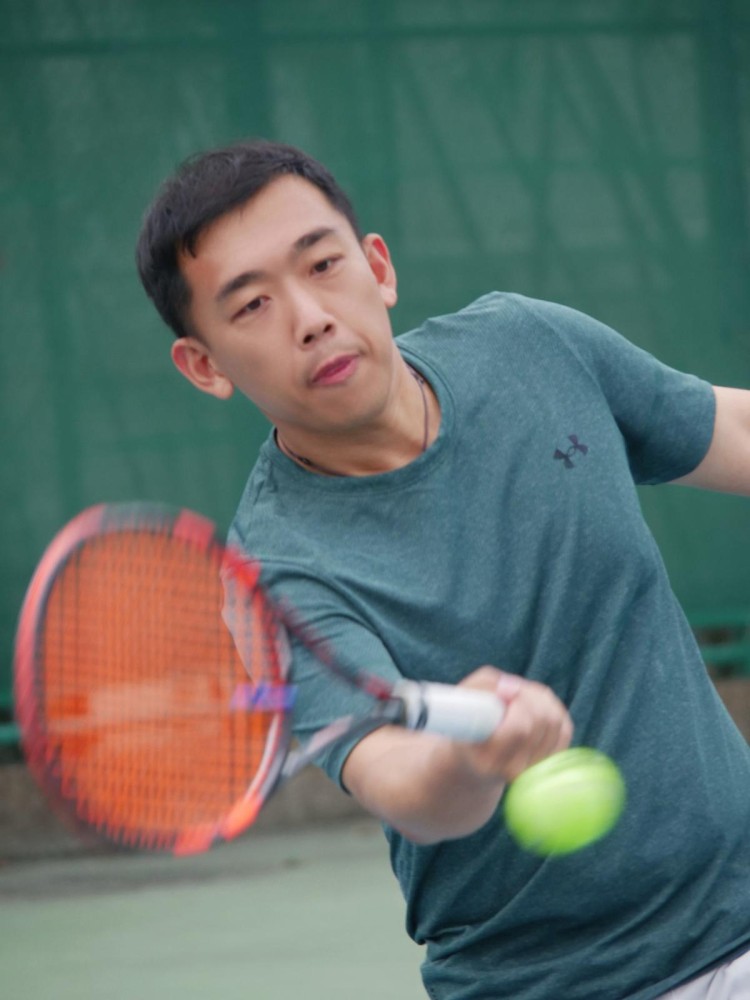
A strong backhand, combining technique and good timing, is a powerful weapon on the court.

Dr Li says footwork is the foundation of tennis. Quick lateral movements and agile positioning make all the difference during a match.

Dr Li believes the tennis court is a place for developing inner strength. Every movement on the court cultivates self-discipline and focus.
Many children decorate their rooms with posters of their idols. For Dr Li Chen, Assistant Professor in the Department of Social Sciences and Policy Studies (SSPS), it was Maria Sharapova, the retired Russian professional tennis player and five-time Grand Slam champion.
Before picking up a racket himself in 2019, Dr Li had long been a tennis enthusiast, watching countless matches both on television and live in stadiums. “My favourite male tennis player is Stan Wawrinka, renowned for his powerful backhand and perseverance, especially as he continues to compete after turning 40. My favourite female player is Maria Sharapova, known for her passion, determination, and early Grand Slam victories,” Dr Li shares.

Dr Li’s favourite tennis players: Maria Sharapova and Stan Wawrinka. (Photos: Wikipedia)
Playing tennis has brought Dr Li many benefits beyond physical fitness. After each session, he feels refreshed and re-energised, which helps him stay focused and productive at work. “Tennis is not just about competing, swinging a racket, or positioning your arms and legs; it is an inner sport that demands concentration of both body and mind. It teaches me to overcome nervousness and self-doubt, pushing me to build mental resilience,” the SSPS scholar says.
The sport has also fostered Dr Li’s self-discipline, self-awareness, and commitment to growth. “It’s truly an excellent sport. Every effort I make, every drop of sweat I shed, and every lesson I learn on the court contributes to my development,” he adds. Over the years, what began as a quest for better health has become a deeper journey of self-understanding. “The sport strengthens my mental resilience and contributes to my personal growth. More importantly, it teaches me that, whether in a match or in life, staying calm under pressure, maintaining self-confidence, and keeping your focus on your goals are the keys to success,” he explains.
Dr Li now plays three to four times a week with different partners, dedicating two to three hours per session to practice singles or doubles. After several years on the court, his passion remains undimmed. He is now considering hiring a coach to refine his technique, improve his footwork, and develop tactical strategies suited to his playing style , firmly believing that effort in the sport always brings rewards.
“I will continue improving my skills by playing more matches against competitive opponents. I believe that continual progress, both physically and mentally, will help me enjoy the game even more, push past my limitations, and reach new personal milestones,” he says with confidence.

Dr Li says it takes very refined technique to produce a powerful shot.

On the tennis court, Dr Li finds not only excitement, but also social connection and fun.

Dr Li plays tennis three to four times a week with competitive players. Dr Andy Chiu, right, also from SSPS, is one of his regular opponents.

Mastering the perfect swing requires extensive practice, focusing on precision, angles, and spin.
